Lista Spesa Facile
How to stop throwing food away: 8 habits against food waste
Wilted salad, stale bread, out-of-date yogurt at the back of the fridge: throwing food away feels bad, and it costs money. The good news is that most waste at home can be avoided with a few habits, starting when you do the shopping.
1. Buy only what you need
Waste starts at the supermarket. A list based on the week's meals, with quantities, is the most effective way not to fill the fridge with things you won't have time to eat. If you want a method, it's all in how to plan your weekly shop.
2. Check the fridge and pantry before you go
Before writing the list, look at what you already have. Not just so you don't buy it again, but to plan meals that use up what's about to expire.
3. Avoid duplicates at home
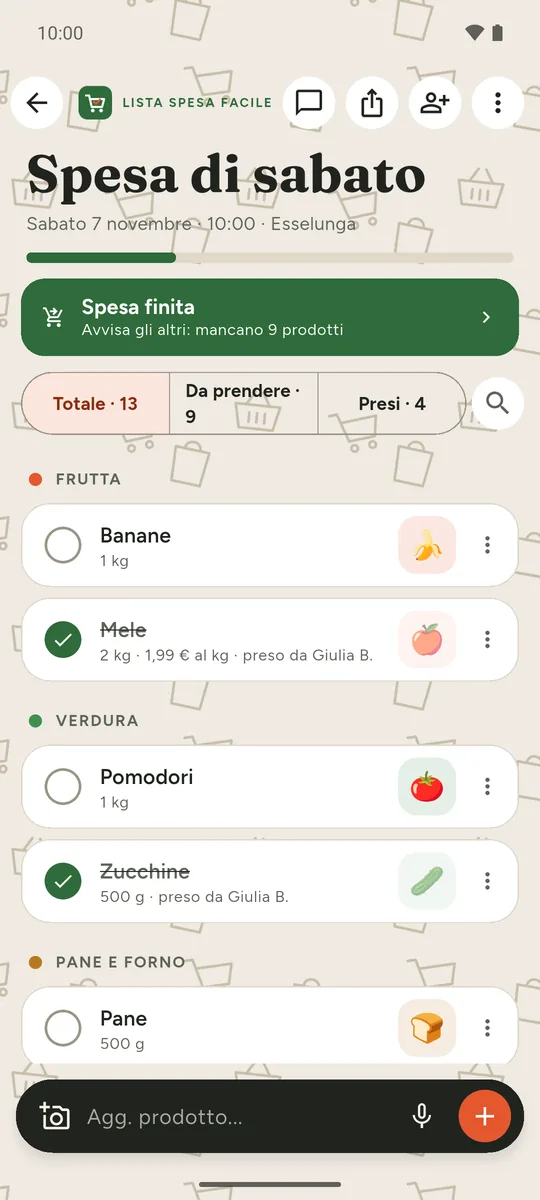
When two people do the shopping, duplicates are the rule: two cartons of milk, two lettuces. A shared list, where whoever buys something ticks it off, gets rid of them.
In practice: with Lista Spesa Facile everyone sees the same list in real time, and next to every item taken you can see who took it. If someone has already got the milk, you see it straight away.
4. Learn the difference between the two dates
Packaging can carry two different labels:
- "Use by" is about safety: don't eat the product after that date. You find it on fresh food such as meat, fish and fresh milk.
- "Best before" is about quality: after that date the product may lose some flavour or texture, but if the pack is intact and has been stored properly it's generally still fine to eat. It applies to pasta, biscuits, tins, rice.
Knowing the difference stops you throwing away food that's still good. When in doubt, look, smell and taste before deciding.
5. Store fruit and vegetables properly
- Salad and leafy greens last longer in a closed container with a sheet of kitchen paper.
- Bananas, tomatoes, potatoes and onions don't belong in the fridge.
- Fresh herbs keep well in a glass of water, like flowers.
- Keep apples and bananas away from other fruit: they make it ripen faster.
6. Use the freezer
Bread, meat, fish, sauces, cooked vegetables, even grated cheese: almost everything can be frozen. If you know you won't eat something in time, freeze it before it's too late, not when it's about to go off. Write the date on the bag.
7. Use up leftovers
Stale bread becomes breadcrumbs, bread salad or meatballs. Slightly soft vegetables go into a soup or an omelette. Leftover pasta becomes a pasta bake. One evening a week for leftovers empties the fridge and saves a dinner.
8. Put what expires first at the front
In the fridge and pantry, new products go at the back and older ones at the front. It's the warehouse rule of "first in, first out", and it works in the kitchen too.
Less waste, less spending
Wasting less isn't just about conscience: everything you don't throw away is something you don't have to buy again. And it all starts with a good list. For more ways to spend less, read how to save money on groceries.
Shop with Lista Spesa Facile
The shared list that sorts itself by aisle and updates on everyone's phone. Free.