Lista Spesa Facile
How to save money on groceries: 10 tips that actually work
Saving on groceries doesn't mean buying the worst product or driving to five supermarkets for a deal. Most of the time it's enough to change a few habits. Here are ten simple tips you can use on your very next shop.
1. Never go without a list
It's the most obvious tip and the one that matters most. Without a list you buy by eye: whatever you see, whatever looks good, whatever is on offer even if you don't need it. With a list you walk in knowing what to get, and temptation drops a lot. If you're not sure where to start, read how to make a grocery list and never forget anything.
2. Look at the unit price, not the pack price
On the shelf label, under the price of each product, there's the price per kilo or per litre. It's the only fair way to compare two different packs. The big pack isn't always the cheapest, and "family size" packs sometimes cost more per kilo than the regular ones.
3. Try the store brands
Pasta, flour, sugar, beans, milk, detergents: for many basics the supermarket's own brand costs less and the difference in quality is small or none. You don't have to switch everything: try one product at a time and keep the ones you like.
4. Write down what you pay
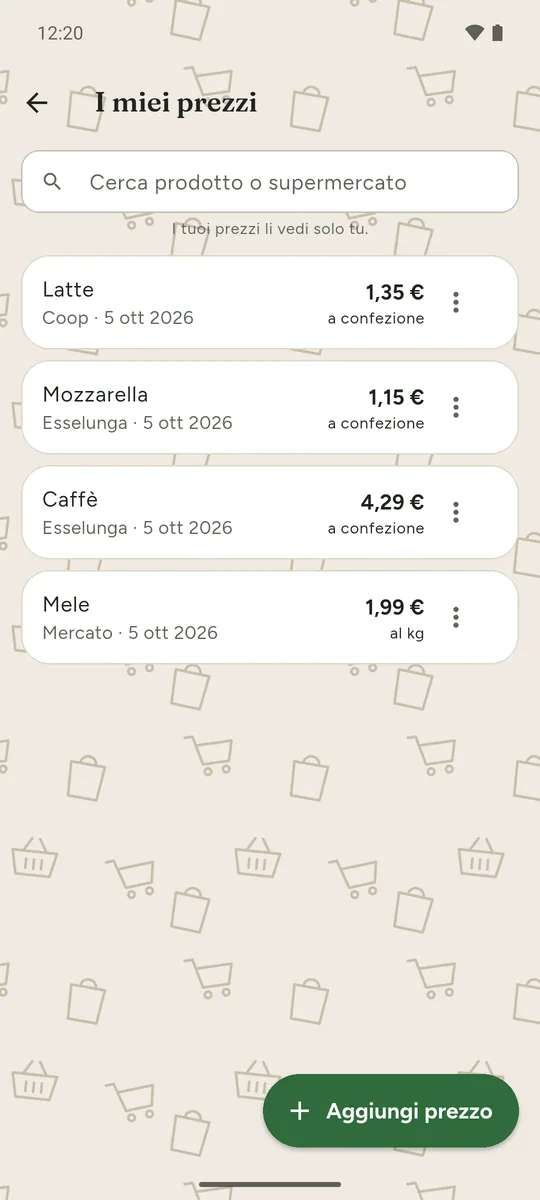
Few people really know how much the things they buy every week cost. Noting the price of what you buy most often makes you notice straight away when something goes up, or when another supermarket sells it for less.
In practice: in Lista Spesa Facile you can note how much you paid for a product and where. Next time you'll see it written under the product in your list, so you can compare at a glance. Only you can see your prices.
5. A deal is only a deal if you need it
A "3 for 2" on cheese that then goes off in the fridge isn't a saving: it's an extra expense. Take advantage of offers on things you use anyway and that keep: pasta, tins, detergents, toiletries.
6. Shop less often
Every time you walk into a supermarket, even just for bread, it's easy to leave with something extra. One big, well-planned weekly shop plus at most a quick stop for fresh food almost always costs less than lots of small ones.
7. Don't shop hungry
It sounds like a cliché, but when you're hungry you buy more snacks, more sweets and more ready meals. If you can, go after eating.
8. Look high and low on the shelves
At eye level you usually find the products the store wants you to notice, not always the cheapest. The cheaper alternatives are often on the lowest or highest shelves.
9. Buy fruit and vegetables in season
They cost less, taste better and last longer. Strawberries in December or oranges in August come at a price.
10. Throw away less
The biggest saving is often not at the supermarket but in the kitchen: everything that ends up in the bin is money thrown away. Buying only what you'll actually eat, storing food well and using leftovers makes a huge difference. We cover it in how to stop throwing food away.
Bonus: if there are several of you, coordinate
In a family or a shared flat, people often pay twice for the same thing because nobody knows what the others have already bought. A shared list, where everyone ticks off what they take, avoids duplicates. With Lista Spesa Facile everyone sees the same list in real time, even whoever is already at the supermarket.
Shop with Lista Spesa Facile
The shared list that sorts itself by aisle and updates on everyone's phone. Free.